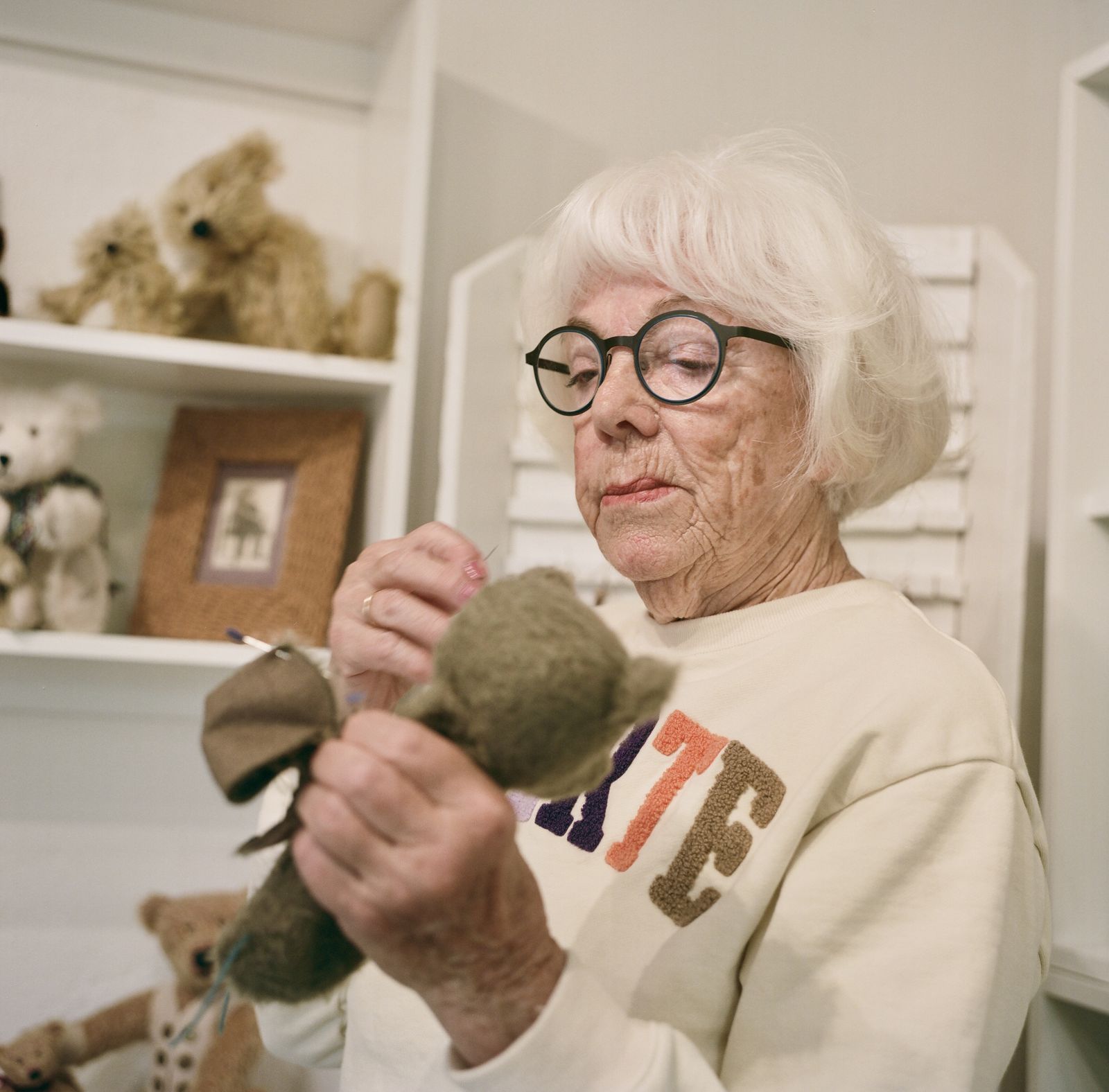
I shoot on on many different cameras - but the only one that I keep coming back to for my professional work is the Rolleiflex. It's a a twin-lens reflex built in 1959. No autofocus, no light meter, no screen, no second chances. When I first started shooting with it - I would get more poor photos than quality ones. After some time - that pattern has flipped - but I still have to accept it's an imperfect and tricky process. All the while, I've stuck with it for it's magical rendering and sharpness, but also because it tends to bring out a special smile in people.
The first thing you notice is that I look down into it, not out at you. The Rolleiflex has a waist-level finder, I hold it at my chest and look down onto a piece of ground glass. That small geometry changes everything: there's no big black lens covering my face, so we keep eye contact, and people relax in a way they never quite do when a camera is pointed at them like a question.
Then there's the frame. Square, six by six centimetres on 120 film, far larger than a 35mm negative, which is where that soft depth and gentle grain come from. The Carl Zeiss Planar lens renders skin in a way I've never managed to fake digitally. And the shutter is barely a whisper; half the time people don't realise I've taken the photograph at all.
Mostly, though, it's the ritual. Winding on by hand, reading the light myself, composing slowly on the glass. The camera sets the pace, and the pace sets the mood. It's a sixty-five-year-old machine, and it still makes the most honest photographs I know how to make.